What a Transmission Diagnostic Actually Finds
Somebody has told you that you need a transmission. Here is what a proper diagnostic checks before anyone says that, and the three very different outcomes it leads to.
Somebody has told you that you need a transmission. Maybe it was a general repair shop that pulled a code, maybe it was a friend who heard the noise, maybe it was a search engine after you typed in what the car is doing.
That is one of the most expensive sentences in auto repair, and it is wrong often enough to be worth checking before you act on it. A transmission diagnostic exists to answer one question: what is actually wrong, and what is the cheapest thing that fixes it.
A trouble code names a circuit, not a cause
Almost everything about a modern transmission passes through a computer. The transmission control module reads throttle position, vehicle speed, input and output shaft speeds, fluid temperature and line pressure, and commands solenoids in the valve body to make shifts happen. When something does not match what the module expects, it stores a code.
That code is real information. It is not a diagnosis.
Take a shift solenoid code as the standard example. It can mean a failed solenoid. It can equally mean a chafed wire, a corroded connector, a valve stuck in the valve body, low line pressure from a worn pump, fluid degraded to the point that the solenoid cannot move enough of it, or a clutch pack worn far enough that the module sees the wrong shaft speed ratio and blames the shift for it. Same code, six repairs, ranging from an afternoon of work to a full rebuild.
A shop that reads the code and orders the part named in it will sometimes be right. When it is wrong, you have paid for a part you did not need and you still have the problem.
What a diagnostic actually checks
A proper diagnostic is a sequence, and the scan tool is not the first step in it.
**The road test comes first.** There is no substitute for feeling what the car does, because the symptom as described over the counter and the symptom itself are often two different things. What matters is when it happens: cold or warmed up, which gear, light throttle or full, at what speed, under load or coasting. A shudder at a steady cruising speed points somewhere very different from a flare in engine speed between two gears under acceleration.
**The fluid, on level and on condition.** Level first, because low fluid on its own causes slipping and a surprising number of complaints stop right there. Then color and smell. Translucent red is healthy. Dark and burnt means clutch material has already cooked. Metal in the fluid means something has been wearing for a while, and that turns the conversation from what to repair into what is left of the unit.
**The vehicle on a rack, looking for leaks.** Red on the driveway usually means an external seal or gasket, which matters because most external seals can be replaced with the transmission still in the vehicle. The exception worth knowing is the front seal, which sits behind the torque converter and requires pulling the unit, so it is a different job at a different price.
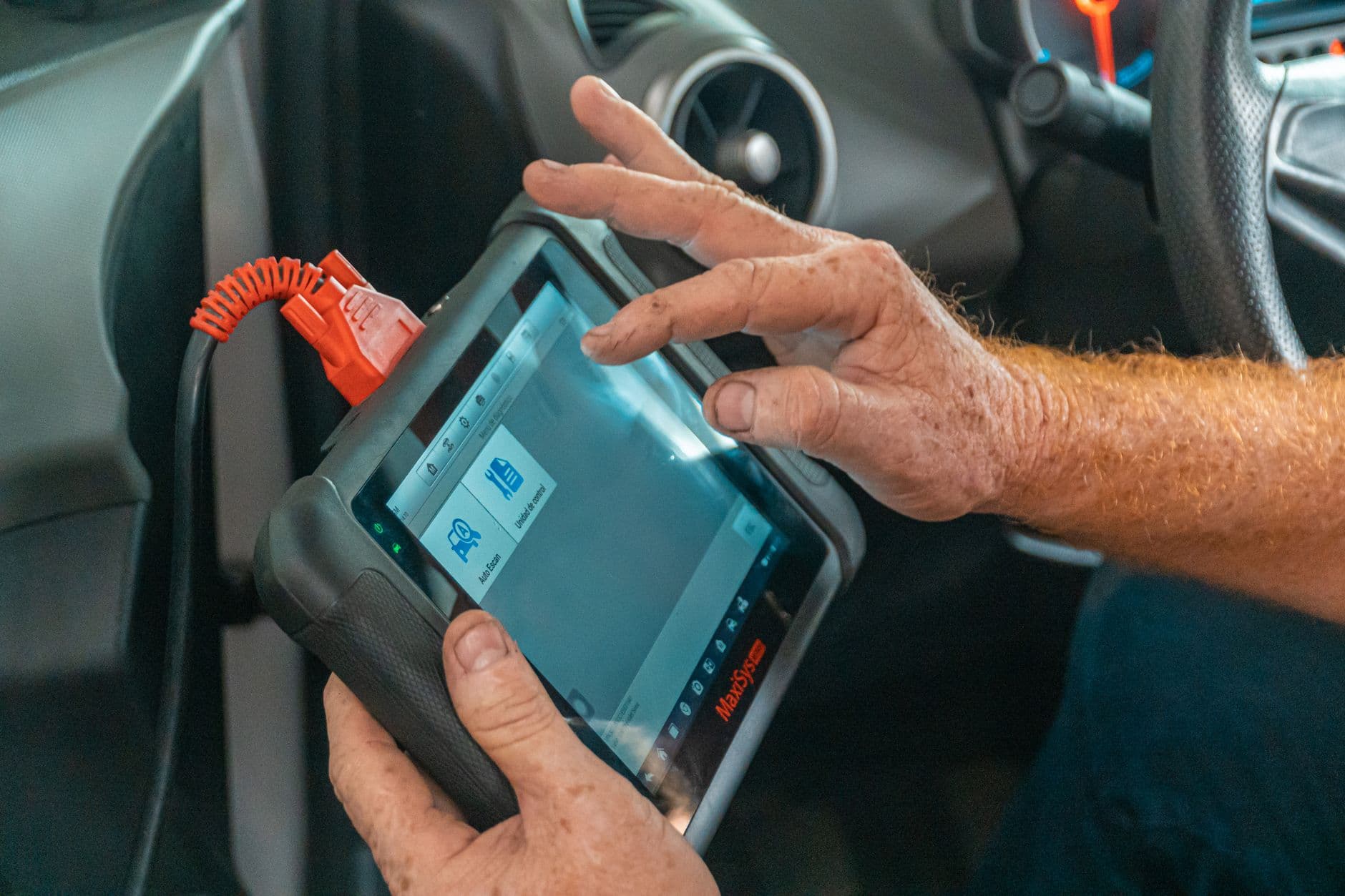
**The scan tool, on live data and not only stored codes.** Codes and freeze frame data tell you what the module saw and the exact conditions it saw it in. Live data during a road test tells you more: commanded gear against actual gear, input shaft speed against output shaft speed, line pressure, fluid temperature. Slip becomes a number instead of an opinion.
**The engine, because the engine drives the shifting.** A transmission takes its cues from the engine. On a computer-controlled unit, a bad sensor feeding the module produces a shifting complaint with nothing wrong inside the transmission at all. On older non-computer transmissions, shift timing comes from a throttle cable or a vacuum modulator, and a vacuum leak or a misadjusted cable makes the unit shift early or late. A vacuum gauge answers that, and a fair number of transmission complaints on older vehicles disappear after a tune-up.
**The pan, when the rest of it warrants it.** Dropping the pan shows the filter and shows what has been collecting in the bottom of the case. A fine grey paste is normal wear. Hard chunks and bearing rollers are not.
Why guessing is the expensive route
**Replacing a transmission that was fine.** Removing and replacing a unit is a large job with a large bill, and the number of times the actual fault turns out to be outside the transmission is not small. An engine performance problem, a sensor, a wiring fault, a throttle cable: any of them can produce a complaint that reads as a failing transmission from the driver's seat.
**The parts cannon.** Buying the cheapest suspected part first and working upward is not a diagnostic strategy. It is a series of small bills that add up to more than the correct repair would have cost on its own.
**A flush on a transmission that needed a rebuild.** This is the one that generates the most bad feeling, because the timeline makes the shop look responsible. If the clutches are already worn and the old, thickened fluid is the only thing still generating enough friction to move the car, fresh fluid can make the slipping obvious immediately. The service did not break it. The service uncovered it. A shop that only looks at transmissions checks the fluid and runs the road test before it sells you a service that will not help.
The three things a diagnostic leads to
A transmission diagnostic should end with a specific fault, a specific recommendation and a written estimate. In practice the recommendation is one of three, and they are not close in price.
**An external repair, with the transmission still in the vehicle.** Solenoids and most electrical parts come out with the pan. Sensors, wiring, a valve body, external seals and gaskets, a throttle cable or modulator adjustment, a band adjustment on an older unit. This is a far larger share of outcomes than most people expect, and it is the single most useful thing to know before assuming the worst. It is also the bulk of what transmission repair means day to day.
**A rebuild.** The unit comes out and is disassembled on a bench. Every part is laid out and inspected, cleaned or replaced, and anything with a friction surface, meaning bands and clutches, is replaced rather than reused. All gaskets and seals are replaced, and the torque converter is replaced with a remanufactured one. Technical service bulletins get checked as well, because plenty of these transmissions have known design weak points that the manufacturer addressed after the unit was built, and the upgrade kits go in during the rebuild so the same failure does not come back around.
**A replacement unit.** Sometimes a rebuilt or remanufactured transmission makes more sense than rebuilding the one you have. It is worth knowing that any given transmission model can have many variations depending on the vehicle, the engine, the axle ratio and even tire size, so a replacement has to be matched properly. Get that wrong and the mild version is a speedometer reading high or low. The bad version is incorrect shift points, or a failure because your engine makes more power than the donor unit was designed for.
Cost sits behind all three, so ask about it directly. Financing exists for the larger jobs, and the warranty is honored at all five of our locations, which matters if you are the kind of driver who is in Delano one week and Tehachapi the next.
Getting the most out of a free diagnostic
Our diagnostic is free, which removes the usual reason for putting this off. A few things make it more accurate.
**Describe the symptom precisely.** When it started, whether it happens cold or warm, at what speed, in which gear, under load or coasting, and whether anything changed shortly before it started, including recent service anywhere.
**Do not clear the codes before you come in.** Freeze frame data goes with them, and that data is frequently the most useful thing on the scan tool.
**Come in while it is still intermittent.** An intermittent fault is a repairable fault far more often than a dead one is.
**Bring records if you have them,** particularly anything relating to fluid service.
Book a free diagnostic at whichever of our five Kern County locations is closest. If the answer is that the transmission is fine and something else is going on, that is a real answer, and we would rather give it to you than sell you a transmission you do not need.