Transmission Fluid: When It Actually Needs Changing
The owner's manual says the fluid is filled for life. The transmissions we open up say otherwise. Here is what the fluid is doing, how to read it yourself, and when a change is due.
If you cannot remember the last time the transmission fluid was changed in your car, it is overdue. That is the honest short answer, and for a lot of drivers it is the whole article.
It deserves a longer answer because transmission fluid is the one fluid nobody nags you about. Engine oil gets a sticker on the windshield and a reminder on the dash. Transmission fluid gets a line buried in the owner's manual, and on a lot of newer vehicles that line says the fluid is filled for life and never needs changing.
We have been rebuilding automatics in Bakersfield since 1956, and the most common thing we open up is not an abused transmission. It is an ordinary one that never towed anything heavy and simply ran the same fluid for a hundred thousand miles until it stopped behaving like a lubricant.
Lifetime fluid is a real term. It just does not mean your lifetime.
Every manufacturer defines the word differently, and it is almost always shorter than you would guess. Engineers design to a target vehicle service life, usually quoted somewhere in the range of 100,000 to 150,000 miles. The fluid has to survive to that point. It does not have to survive past it, because past that point the vehicle sits outside any warranty the manufacturer is paying claims on.
So a fill for life transmission is not one that never needs fluid. It is one the factory expects to outlive its warranty. Those are two very different promises, and only one is being made to you.
A lot of modern units also have no dipstick, which gets presented as a convenience feature. It is really a statement that the factory does not expect the owner to look. Level and condition on those units are checked through a fill plug with the fluid at a specified temperature, which makes it a shop job rather than a driveway job.
What the fluid is actually doing in there
Automatic transmission fluid does four jobs at once, which is why it wears out sooner than people expect.
It is a hydraulic fluid. Line pressure from the pump is what applies the clutch packs and bands that give you each gear, so shift quality is a direct consequence of fluid condition rather than a loose metaphor for it.
It is a friction fluid. ATF carries friction modifiers so clutches grab and release at an engineered rate. Those additives deplete, and when they do, clutches either slip briefly before locking or slam home too hard. Both wear the friction material away.
It is coolant. The fluid carries heat out to a cooler, usually a heat exchanger inside or beside the radiator. Heat is the number one killer of automatic transmissions, and fluid is the only thing moving it.
It is also the lubricant, feeding the bushings, planetary gearsets and pump, and carrying wear debris to the filter.
Fluid degrades by oxidation, and heat drives oxidation. Oxidized fluid darkens, loses its friction properties, varnishes the valve body and sheds heat less effectively. Clutches slip a little more, slipping makes more heat, heat cooks the fluid faster. It is a loop, and it accelerates. Meanwhile the clutch material coming off circulates through a valve body machined to tolerances that have no tolerance at all for grit.
How to read your own fluid in about five minutes
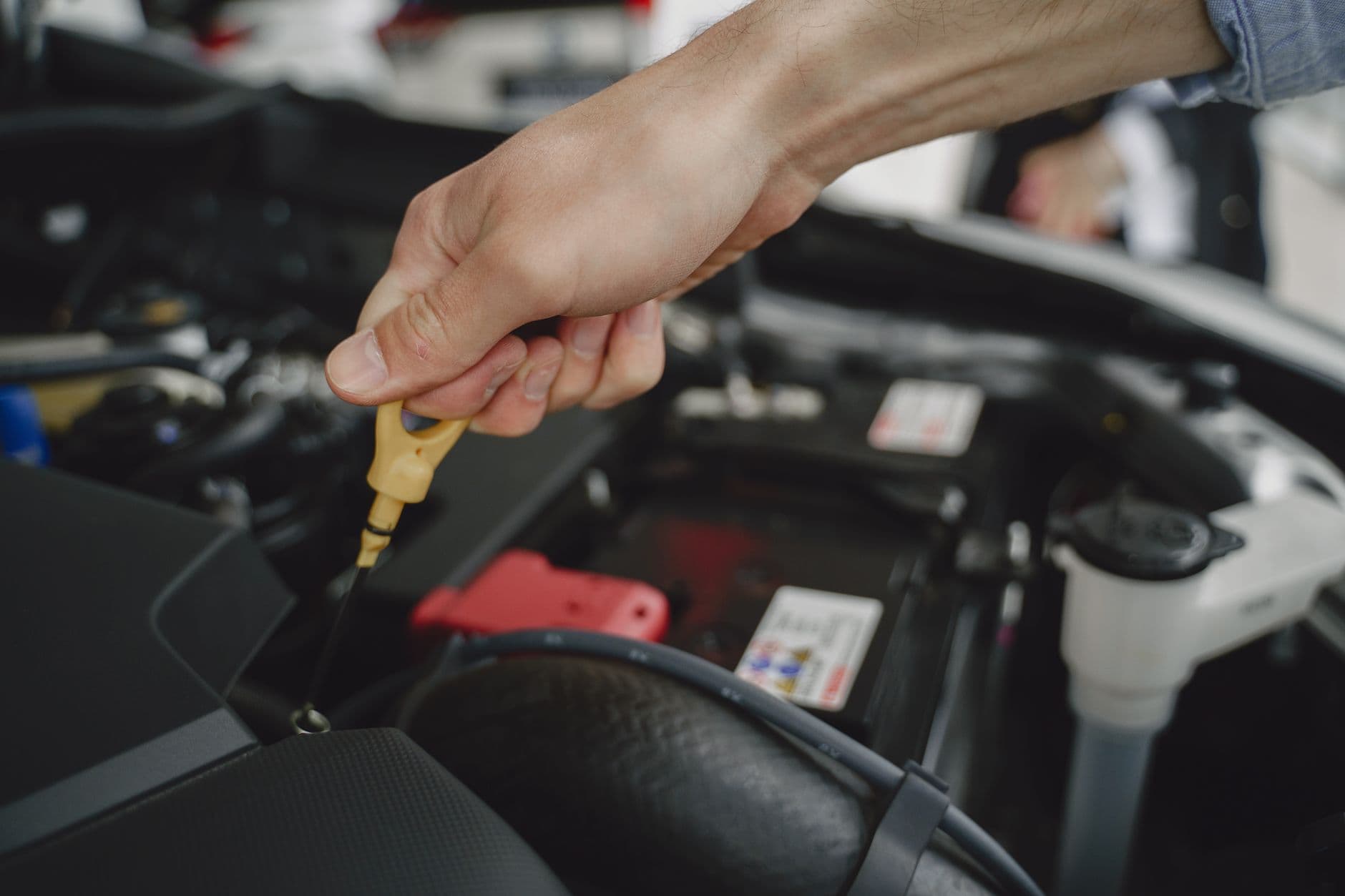
If your vehicle has a transmission dipstick, checking the fluid is one of the most useful things you can do yourself. Procedures differ, so check the owner's manual, but the usual method is engine warm and running, vehicle level, transmission in park or neutral. Pull the dipstick all the way out and wipe it on a white rag.
Healthy fluid is red to light brown and translucent. It should still look like a fluid rather than a stain.
Dark brown or near black fluid, especially with a burnt smell, has overheated and is no longer protecting anything.
Glitter is bad news. Tilt the rag in the sun. Fine metallic sparkle or gritty particles are clutch material and steel wearing off inside the case.
Pink, milky or foamy fluid means coolant has crossed into the transmission through a failed cooler in the radiator. That needs attention immediately, because coolant destroys clutch material.
Low fluid means it is going somewhere. Red spots on the driveway are usually an external gasket or seal, and a reseal is often all that is needed. Most external seals can be replaced with the transmission still in the vehicle, but a front seal sits behind the torque converter, so reaching it means the unit comes out. That is the difference between a modest transmission repair and a much larger one, and a good reason not to let a small leak run.
Normal conditions, severe conditions, and why Kern County is severe
This matters more than any mileage number. Manufacturer intervals are written against a normal duty cycle, and nearly every manufacturer publishes a severe service schedule alongside it. The severe criteria are broader than people assume: stop and go traffic, short trips, sustained high ambient temperatures, dust, towing or hauling, and long climbs.
Read that list, then think about August in Bakersfield, a loaded trailer on the Grapevine, or a work truck on the Tehachapi grade. That is severe service by the manufacturer's own definition, not by ours, and if most of your driving looks like that, the normal interval was never written for you.
Towing and diesel work is harder on fluid than almost anything else a street vehicle does, because a torque converter under load in high heat is a very efficient heater. If that is your situation, treat fluid and cooler condition as scheduled maintenance rather than a someday item, which is most of what our heavy duty and diesel transmission work comes down to.
Dexron, Mercon and everything else
Spend any time in a transmission shop and you will hear what sounds like spilled alphabet soup. Dexron, Mercon, Diamond, Matic J, K and S, DW-1, Type-T, and a long list beyond. Are they close enough to use interchangeably?
They are not. You want an OE approved fluid specific to your vehicle. Dexron specifications are GM. Ford and Mazda designed their transmissions around Mercon. Honda has DW-1, Toyota its own ATF Type-T family, and most other import brands specify something of their own.
The differences are not branding. They are viscosity and friction modifier packages matched to the clutch materials and shift strategy the unit was built with. Put the wrong friction characteristics into a transmission and it shows up as torque converter shudder, harsh or lazy shifts, and over time accelerated clutch wear. Universal fluids exist and have their place, but by definition they are a compromise rather than a match to yours. And the target keeps moving: the industry stopped using whale oil in transmissions back in the 1960s, and as transmissions gain gears and chase efficiency the specifications only get narrower.
When new fluid is not the answer, and how often to change it
Fluid changes are preventive maintenance, not a repair, and there is a point past which they stop being a good idea.
If a high mileage transmission is already slipping badly and the fluid is black, fresh fluid does not put worn friction material back on the clutches. On a neglected unit, tired fluid and a marginal torque converter are sometimes the only thing holding the status quo together, and additives buy a short reprieve rather than a fix. That is why a car that is already slipping gets a diagnosis instead of a fluid special, and why the honest answer is sometimes a repair and sometimes a rebuild.
For a transmission that is still healthy, the practical version is short. Check the level and condition twice a year, or at every oil change, if your vehicle has a dipstick. Follow the severe service schedule if your driving matches the severe criteria, which for most Kern County drivers it does. And do not read fill for life as never.
Some manufacturers suggest intervals as early as 30,000 miles, others stretch to 60,000 or 100,000, and we have generally found most vehicles well served by fresh fluid somewhere in the 50,000 to 60,000 mile range. Your vehicle's own schedule governs, and we can look up the manufacturer's recommendation for your model.
If you are past the interval it is usually not too late, though it does get later. Bring it in for a free diagnostic and we will tell you whether you are due, fine, or looking at something else entirely. We would rather check your fluid today than rebuild the transmission next year, and there is a shop near you across Kern County either way.