Automatic vs Manual: What Is Different Inside, and What We Service
The mechanical difference between an automatic and a manual, the failures each one is prone to, and a plain answer on what this shop does and does not service.
There are two questions hiding inside automatic versus manual. One is the enjoyable one: which is better to drive, which is cheaper to run, which will still exist in ten years. The other is the practical one people call us about, which is whether we are the shop that can fix the thing between their engine and their wheels.
Here is the short answer to the second question before the long answer to the first. We service automatic transmissions. That has been the whole business since 1956. Not manuals. CVTs are a case of their own: we do not rebuild them, but we do fit new ones. There is a section on that below, because the CVT question is the one that catches people out.
What is actually different inside
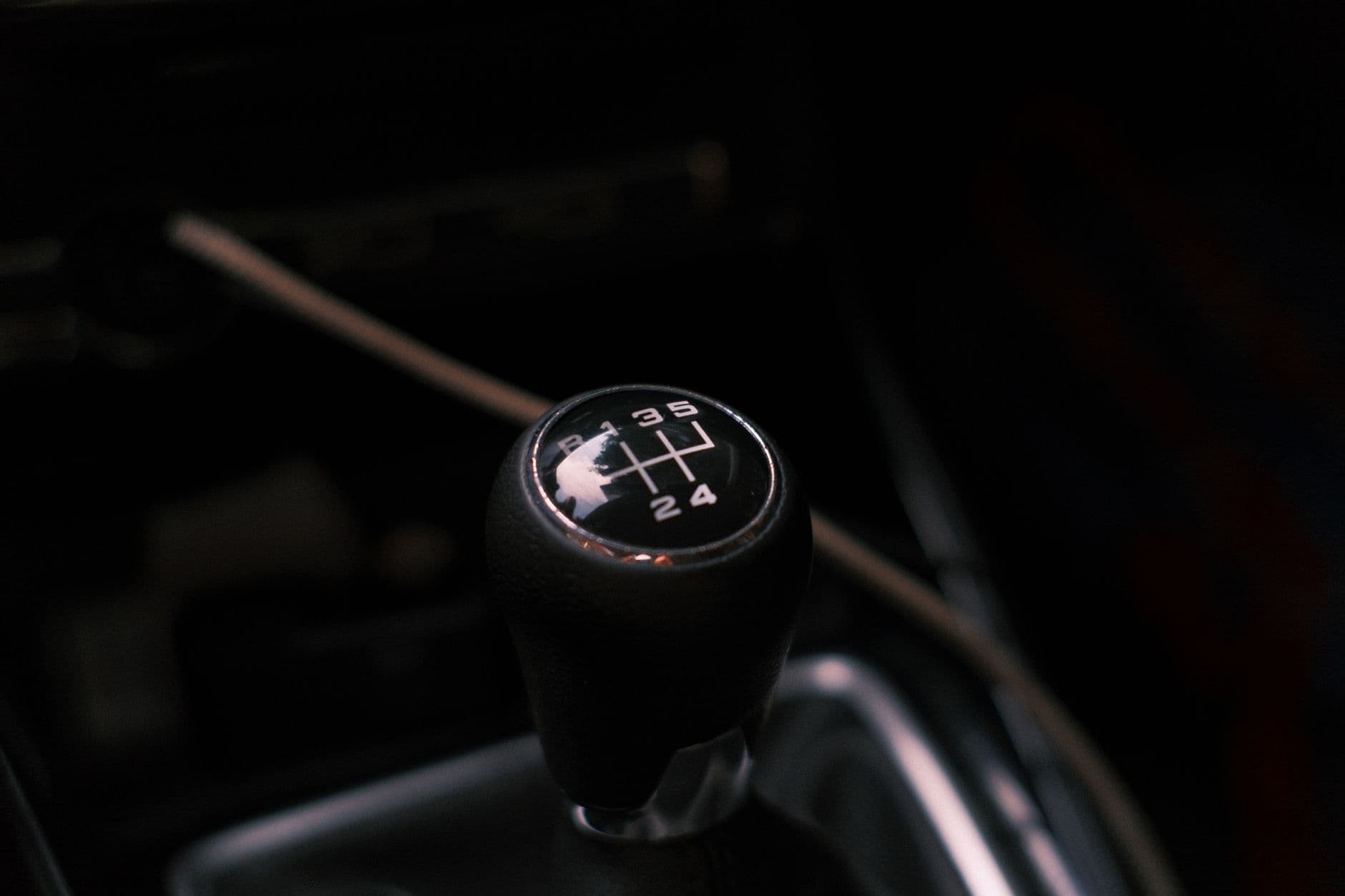
A manual is the simpler of the two, because you supply the intelligence. Your left foot disconnects the engine from the gearbox through a clutch disc, your hand picks the ratio, and the transmission holds and synchronises gears while you do the deciding. The wear item is the clutch, and it wears at a rate set by how the driver uses it.
An automatic makes every one of those decisions itself, and pays for that in complexity.
Instead of a clutch pedal there is a torque converter: a sealed doughnut full of fluid, with an impeller driven by the engine on one side and a turbine connected to the transmission on the other. The impeller throws fluid at the turbine, the turbine spins, and power crosses the gap without two pieces of metal ever touching. That process is called fluid coupling, and it is the reason the automatic picked up the nickname slushbox. There is genuinely slushing fluid doing the work.
Behind the converter sit planetary gearsets, and the ratios are selected by applying and releasing clutch packs and bands with hydraulic pressure. What decides that pressure is a valve body: a maze of passages, valves and solenoids taking its orders, in anything modern, from a transmission control module.
So an automatic is a gearbox, a hydraulic system, a cooling system and a computer, all inside one case. A manual is a gearbox.
The efficiency argument flipped over
For a long time the manual won the fuel economy argument outright, and the reason was the torque converter: older converters allowed a lot of slip, and slip is energy turned into heat instead of motion. That is no longer the situation. Lockup converters mechanically couple the engine to the transmission once you are up to speed and remove the slip entirely, and modern automatics carry more ratios than any manual ever offered.
Longevity moved as well. A manual's clutch is a consumable, and over a long ownership you may buy several. A well maintained automatic can cover the same distance without an equivalent scheduled replacement, which is a good part of why the automatic won the market.
None of which means the manual is dead. But automakers now build most performance cars with dual-clutch or fast-shifting automatics because those are quicker, and the manual has moved from the default to a deliberate choice.
What actually fails on an automatic
More complexity means more things that can go wrong, though not more that go wrong often. The failures cluster into three areas.
**The torque converter.** It couples the engine to the transmission, and it depends on fluid both to do that and to carry the heat away. Fluid that has lost its ability to cool and lubricate lets the converter run hot until the clutch lining inside it fails. The early warning is usually a shudder at a steady cruising speed or under light throttle, which drivers often blame on the road surface or a tire.
**Clutch packs.** The planetary clutches apply and release on every single shift. Old or overheated fluid does not apply them quickly enough, so they slip momentarily under acceleration, and slipping friction material burns. Once burnt, the debris circulates and starts wearing everything downstream of it.
**Valve body and solenoids.** As transmissions took on more electronic control, more of the failures moved here. A stuck valve or a failed solenoid shows up as a harsh shift, a shift that will not happen, or a limp mode that leaves you in a single gear. This one is worth knowing about, because it is frequently repairable without removing the transmission at all, which makes it one of the cheaper outcomes on the list.
None of that should put anyone off an automatic. Shops see the worst examples of everything, and units that get the maintenance they were designed for generally do fine. Transmission repair covers most of what goes wrong. A rebuild is what happens when it was left too long.
Automatics worth knowing about
A few designs earned genuine respect on the bench.
**GM PowerGlide.** A two-speed built from 1950 to 1973, one of the first automatics in mass production and simple enough to be easy to live with. Nicknamed the slip-n-slide PowerGlide, it is still run in drag cars behind engines making four figures of horsepower, which is not the future anyone predicted for a 1950s family car transmission.
**Ford C6.** A three-speed that replaced Ford's weaker MX unit, lighter and with more torque capacity, in service from 1966 to 1996. It appeared under an enormous range of Fords, which is why it is still one of the most familiar domestic automatics to work on.
**GM TH350 and 700R4.** The pair that most Kern County classics and hot rods are running. The TH350 is a three-speed with a reputation for absorbing abuse, and the 700R4 added the overdrive that made a period car usable on a modern highway. We still rebuild both, and for something vintage a rebuild beats a replacement unit, because there is no remanufactured shelf stock for a car of that age.
**Allison 1000.** Introduced in 2001, near-indestructible by reputation, and rated in its variants to hold more than 750 lb-ft of torque. It is the reason a Duramax can pull what it pulls, and it is on our benches constantly, not because it is weak but because there are a lot of them in this county and they work hard. Diesel and heavy-duty work is a large part of what we do for exactly that reason.
**ZF 8HP.** The eight-speed that ended the argument. Used by BMW, Fiat, Chrysler and Dodge, and licensed to a list running up through Aston Martin and Bentley, holding up to 516 lb-ft with shifts completed in under 200 milliseconds.
What we service, and what we do not
We service automatic transmissions: cars, trucks, heavy-duty and diesel trucks, and classics. Torque-converter automatics with planetary gearsets, from a 1960s three-speed to a current ten-speed. That is the specialty, and it is why a transmission gets a different level of attention here than at a shop where it is one of twenty things on the board.
**We do not rebuild CVTs, but we do replace them.** A continuously variable transmission gets mistaken for an automatic constantly, because from the driver's seat it behaves like one: two pedals, no shifting, a lever with P R N D on it. Inside, it is a different machine. There are no planetary gearsets and no fixed ratios at all. A steel or composite belt runs between two variable-width pulleys, and the ratio changes continuously as those pulleys open and close.
That construction is the reason we will not rebuild one. The wear that kills a CVT is spread across surfaces that have to stay close to perfect, and a rebuilt unit comes back often enough that we are not prepared to sell you one. So when a CVT has genuinely failed, we fit a new unit and stand behind it. When the fault turns out to be a cooler line, a sensor, wiring or fluid, that is an ordinary repair at an ordinary price, and the free diagnostic is what tells us which of the two you are looking at. Most of the ones we see are Nissans, and there is more detail on Nissan CVT replacement.
**We do not service manual transmissions** either. The clue is in the name.
If you are not certain which of the three you have, that is a normal thing not to know and a two minute question. Give us the year, model and engine, or bring the vehicle by, and we will tell you what is in it and whether it is ours to fix. If it is not, we can usually point you toward someone who does that work.
And if it is an automatic that is slipping, shuddering, engaging late, shifting harshly or leaving red fluid on the driveway, look at it while it is still a symptom rather than a failure. The diagnostic is free. Book one at whichever of our five Kern County locations is closest.